<img height="1" width="1" style="display:none" src="https://www.facebook.com/tr?id=504731893395981&amp;ev=PageView&amp;noscript=1">
Gas compressor_reduced size

Compressor Train Digital Twin

A cloud-based Digital Twin for a Global Energy Leader built on NVIDIA Omniverse
nda-logo-white

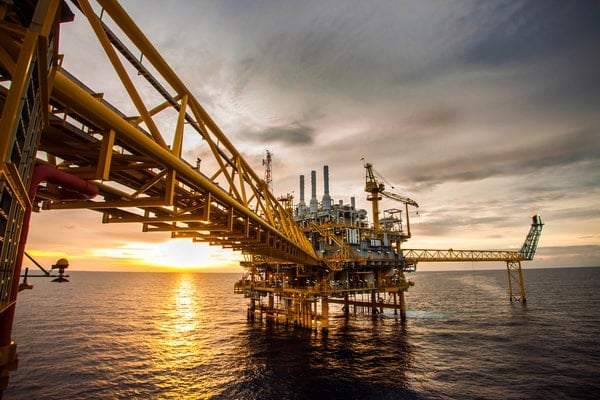
The Client is a Global Energy Technology Leader specializing in large-scale power generation and transmission. Their portfolio includes high-performance compressor trains used in the Oil & Gas sector - massive, intricate systems that require high-precision maintenance and constant engineering oversight.

Case Highlights

Before this project, traditional 3D visualization methods were failing to scale, highlighting the need for advanced industrial software solutions. Large file sizes and heavy hardware requirements made it nearly impossible for remote teams to collaborate or train effectively. Leveraging our expertise in digital transformation services, Softeq partnered with the Client to develop a high-fidelity Compressor Train Digital Twin using NVIDIA Omniverse as a scalable backend platform. 


Our goal was not simply to visualize a 3D asset, but to architect a server-side rendered foundation capable of supporting:


  • Immersive training with real-world physics.
  • Data integration from enterprise databases.
  • Multi-user collaboration without hardware barriers.
  • Custom Application: Built on the NVIDIA Omniverse Kit runtime.
  • Extensions: Custom logic developed in Python for industrial workflows.
  • Server-Side RTX Rendering: Photo-realistic graphics streamed to any device (no local GPU required).
  • OpenUSD: Framework used for opening and rendering OpenUSD files.
  • Centralized Management: Powered by NVIDIA Omniverse Nucleus Server, acting as the Single Source of Truth for all digital assets.
  • PhysX Simulation: The physical aspects of the assets inside the 3D model using NVIDIA PhysX.
  • Zero Downloads: Eliminating the need for transferring multi-gigabyte files; the latest model is always accessible via the cloud. 
Project Information
Engagement model

T&M

Methodology

Scrum

Team
1

Project Manager

1

3D Designer

1

Business Analyst

1

ML Engineer

1

Omniverse Engineer

More Details

Problem

Heavy Client-Side Infrastructure & File Transfer Frustrations 

The client’s previous workflow was a major source of engineering frustration. Waiting hours to transfer and download massive 3GB model files bottlenecked productivity and required high-performance GPUs on every single workstation. This created massive barriers for stakeholders using standard office laptops or mobile devices, making a unified, cloud-based source of truth an absolute necessity for the engineering teams.

Lack of Centralized Architecture

There was no unified backbone for managing 3D assets. Updates had to be redistributed manually, leading to version inconsistencies where different teams were looking at different designs.

Disconnected Data (The "Knowledge Gap")

The 3D models were purely visual and lacked connectivity. There was no way to retrieve live operational data, maintenance logs, or inventory status by interacting with the model. This created a "knowledge gap" between the 3D visualization and the actual engineering data stored in enterprise systems.

Non-Immersive Training

The Client lacked a physics-based environment where technicians could practice complex procedures safely in a shared virtual space.


Solution

reducing-drilling-equipment-downtime-with-embedded-tcp-ip-stack-solutions

Leveraging our authority as a comprehensive industrial software provider, Softeq didn't just use NVIDIA Omniverse out of the box; we treated it as a development core to build a proprietary digital twin application tailored to the Client's specific engineering needs.

Custom Omniverse Kit Extensions

The foundation of our solution was the Omniverse Kit. We developed a suite of custom Python-based extensions that transformed the environment into a functional business tool:

  • Custom UI/UX: We built a streamlined interface that allows non-technical users to navigate complex assemblies easily.
  • Exploded View Logic: We engineered custom logic to handle the "Exploded View" of the compressor train, allowing users to virtually disassemble the machine and inspect internal components while maintaining their spatial and logical relationships.
Server-Side RTX Rendering (SSR) & Streaming

To solve the hardware barrier, we implemented Server-Side Rendering.

  • The Workflow: The heavy graphical processing is performed on a remote server equipped with NVIDIA RTX GPUs.
  • The Result: The system streams a high-quality video feed to the user's device. Users can interact with assets via a standard browser or a lightweight VR headset with minimal local hardware requirements.
Nucleus Server: The Single Source of Truth

We established the NVIDIA Omniverse Nucleus Server as the definitive source for all project data.

  • Collaborative Workflows: Multiple engineers and stakeholders can interact with the same environment simultaneously.
  • Instant Synchronization: When a change is made to the model in the cloud, it is instantly updated across all platforms - Web, VR, and AR - ensuring version consistency worldwide.
Advanced Interactivity & Data Integration

We established a bi-directional connection between the 3D model and external databases.

  • Every component (valves, pipes) is mapped to a unique ID.
  • When a user clicks a part, the application initiates a call to the Client's ERP system. Within milliseconds, the user sees: Part Number, Technical Specifications, and Maintenance History.
Immersive Training with NVIDIA PhysX

To address the training gap, we utilized NVIDIA PhysX to create a "physically honest" virtual environment.

  • Mass and Gravity: Every component has assigned material properties. If a technician "drops" a part in VR, it behaves according to its real-world weight and collision boundaries.
  • Guided Workflows: Technicians follow strict safety protocols (e.g., closing a valve before removing a pipe), with the system preventing incorrect sequences.
  • Visual Validation: As steps are completed, components highlight in green (indicating "Done"), providing instant visual feedback.
Mobile AR for Contextual Learning

Using the Omniverse AR capabilities, we enabled a "Tablet View" where the digital twin can be projected onto a real-world environment. This allows engineers to conduct "spatial walk-throughs" before the physical equipment even arrives at the site.

Seeking to Optimize Connected Device Communication?

See if our specialized skills in embedded connectivity and Bluetooth development are the right fit for your project Learn more
Chris Howard
Chris Howard Founder & CEO

Result

Project Outcomes

We successfully delivered a Minimum Viable Product (MVP) validating:

  • Centralized Digital Twin architecture using Nucleus Server
  • Server-side RTX rendering for hardware-independent access
  • Physics-based immersive training scenarios

The MVP demonstrated technical feasibility and operational value, establishing a scalable foundation for future expansion.

Following the success of the MVP phase, we have begun planning the next stages of the platform's evolution:

  • LLM Integration: Implementing Large Language Models to provide intelligent, interactive technical assistance within the 3D environment.
  • Asset Inventory Integration: Connecting warehouse and supply chain systems for real-time parts availability visibility.
  • Enhanced Inspection Data Injection: Supporting deeper maintenance analytics.

Distance Training: Enabling remote, multi-user technical training for specialists across global locations within the same synchronized virtual space. 

en